
Fifty-three years after the 1973 Decree extinguished multiparty democracy, our country stands at a defining and watershed political crossroads.
What was framed as a corrective intervention to preserve the so-called nation’s traditions and unity has evolved into five decades of absolute rule and turned out to be a tragic royal experiment and a terrible nightmare for the people. The Tinkhundla system has dismally failed to transform the nation into a prosperous state for all.
Instead, it has manufactured massive and catastrophic poverty and inequality while ushering the royal family into the land of milk and honey. It is time to end this enervating experiment, as the Nation looks ahead to the 2028 elections, we must be clear-minded that we can never again allow sham elections in our country.
It is time for the transition to begin and I believe that an inclusive national political dialogue to responsibly manage the process is the best course of action that must be taken.
If change is not managed, it tends to do as it pleases – often resulting in chaos and social disharmony. Change, therefore, must be managed.
The 1973 Decree suspended political freedoms and concentrated executive authority in the monarchy. Since then, the Tinkhundla system of royal rule has functioned as the country’s political architecture prescribing how the people must exercise their inalienable rights.
The system is presented as grassroots and participatory yet structurally it yields no people’s government and prohibits organized political competition. Over time, this framework has revealed its inherent limitations and design flaws. Governance without meaningful contestation weakens accountability. Decision-making without institutional checks invites inefficiency and endemic corruption as exemplified by our current national circumstances.
As King Mswati III approaches four decades on the throne, the symbolic nature of the moment is profound. Forty years of his reign, layered upon 53 years of post-decree absolutism, compel the nation to ask hard questions about the direction of travel our country must take.
It is a time to ask whether historical continuity alone is a sufficient achievement for the nation.
The 2028 elections therefore cannot be a routine repetition of the status quo.
They must mark a transition – peaceful and deliberate – toward a democratic dispensation that recognises political pluralism and the sovereign right of our people to govern themselves. Holding another election under the same restrictive framework would deepen public disillusionment and prolong an already intractable national crisis. By contrast, committing now to multiparty participation would transform 2028 into a milestone of renewal.
Such a recalibration of the nation’s political trajectory requires strategic thinking and intentionality of leadership. It requires leadership depth and acuity that can allow the people to address a decades long national grievance without resorting to violence and political unrest.
Dialogue is therefore the most sensible thing to do and it must begin immediately.
Such a dialogue should be structured around a clear objective: to ensure that the 2028 elections are conducted under a reformed constitutional order that permits political parties and independent candidates to organise, campaign and contest power freely. Such dialogue must include royal family, the government, traditional authorities, all political formations, civil society, business, labour, women’s and minority groups as well youth representatives. It must be time-bound, transparent and outcomes-oriented.
Most importantly, it must be independently managed and led by eminent external parties drawn from the leadership in the African continent and globally, including from the United Nations.
Critically, the dialogue should be taken seriously by all parties to ensure that it delivers substantive structural and lasting change. For 53 years, reform has been deferred in the name of stability. Yet unresolved grievances do not dissolve with time but they simply intensify and may morph into a scenario this country would not survive.
The recent political unrest of 2021, together with decades of civil agitation for change, have clearly demonstrated that the people are no longer content with symbolic consultation. They seek structural change. Constitutional reform, legal amendments and institutional restructuring leading to a new constitution require preparation. If 2028 is to be credible, the groundwork must begin now and the elections themselves should be truly democratic to allow for a full-scale national reset process.
A democratic dispensation would require, at minimum, the formal recognition of political parties; guarantees of freedoms of association, assembly and expression; an independent and professionally staffed electoral commission; and impartial security sector conduct during the electoral period.
These are safeguards and guardrails that would create the baseline conditions of competitive elections that would yield the first ever democratic people’s government. Some will argue that multiparty politics invites division as has been the cardinal argument of the Tinkhundla regime for decades. Yet political diversity is not the enemy of unity but exclusion is.
A system that channels disagreement into institutional debate strengthens social cohesion. When citizens have lawful avenues to express dissent, they are less likely to resort to confrontation. Democracy is not the absence of conflict but the management of conflict through rules.
This is how democratic consolidation takes place and how nations grow. Shutting down political competition is nothing but dictatorship disguised in royal garbs and we are sick and tired of it.
Moreover, the economic case for reform is compelling. Investors and development partners assess political risk carefully. Transparent governance, independent institutions and predictable policy environments attract long-term capital.
Youth unemployment, fiscal pressures and service delivery challenges cannot be sustainably addressed within a framework that limits scrutiny and concentrates authority. A democratic transition would send a powerful signal that our country is truly open for business and is committed to modern governance standards while preserving its cultural identity.
Importantly, a move toward multiparty democracy need not diminish the monarchy. Around the world, constitutional monarchies thrive where sovereigns serve as unifying symbols while elected governments manage day-to-day administration.
By stewarding a voluntary transition, the King would shape his legacy not as the defender of an aging system, but as the architect of peaceful reform. In doing so, he would secure both institutional continuity and historical respect. I am acutely aware of the growing calls for the total overthrow of the monarchy – views that I believe are valid and must remain an open alternative that is available to the forces fighting for the democratization of our country. All options must be on the table as we strive to usher our country into a new political dispensation.
No family and no institution must stand in the way of progress, change is irreversibly inevitable at this stage.
Fifty-three years after the abolition of multiparty democracy, the evidence is clear that absolute rule has not delivered the inclusive prosperity and accountable governance the nation deserves.
We are calling for voice, for meaningful public participation, and the restoration of the dignity and sovereignty of the people. The path forward must therefore be radical, principled and pragmatic.
The country must convene an inclusive national dialogue and commit publicly to a new constitution enabling multiparty elections and a government that has the full mandate and authority to govern.
If the next elections are held under a genuinely democratic dispensation, 2028 will be remembered as the year Eswatini chose renewal over royal dictatorship. It will mark the peaceful conclusion of a 53-year political detour and the beginning of a new chapter grounded in accountability, dignity and shared national ownership.
The time to embrace change has arrived. It is time.
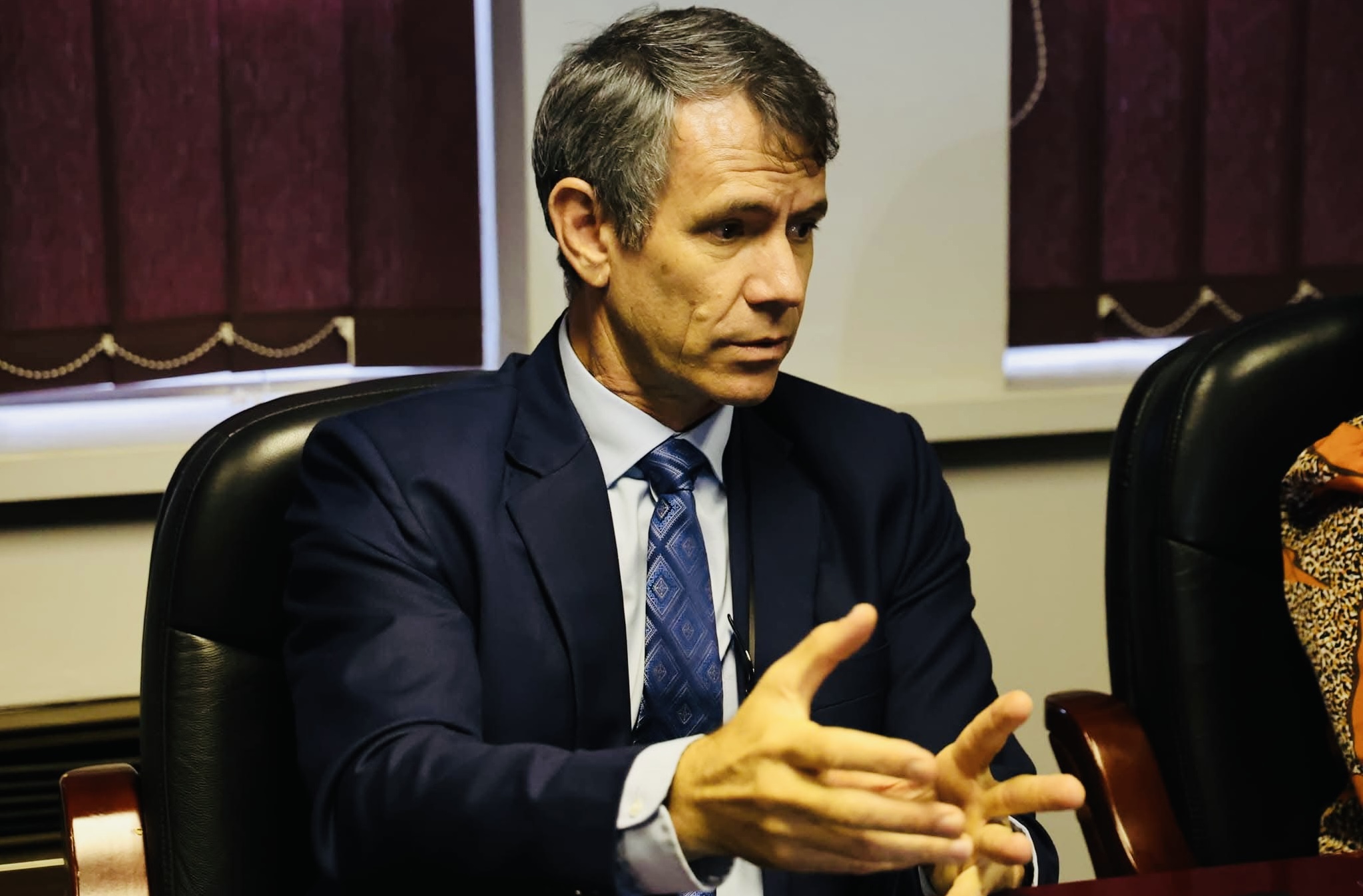
OPINION: The next Eswatini elections shall be under a democratic dispensation (pic:Internet).