
MBABANE:Prince Mhlabuhlangene, the Chairman of the Elections and Boundaries Commission(EBC) has clarified that, Chiefs have powers to summon Members of Parliament(MPs) to enable the voters to hold them accountable and assess their performance.
Responding to this Swaziland News on Thursday evening when asked to share an expert view regarding “ka-Ngcamphalala Chief Mshikashika who is alleged to be considering a community meeting where Siphofaneni MP Nomalungelo ‘LaZwide’ Simelane’s performance would be assessed”, the EBC Chairman first unpacked the ideological context of the Tinkhundla system.
“Mlangeni, do allow me to answer to your enquiry by first briefly outlining, the currently existing platform available under the Tinkhundla Political System of Government and not governance as most people would say. Tinkhundla is a political system by which, the Eswatini Monarchical regency(Sovereignty) rules by incorporating principles of western constitutional Parliamentary democracy at government level, and is premised on geographical land demarcation called Tinkhundla and each Inkhundla being made-up of at least more than one Chiefdom. This is why during any General Elections campaign, where the MPs and Tindvuna te-Tinkhundla are concerned, even though nominated at their respective Chiefdoms ultimately, they then compete or contest at Inkhundla level, because now they are to be voted for by the participation of eligible voters, not from their Chiefdom alone but, also the entire Chiefdoms that make up an Inkhundla,” he said.
The Chairman of the Elections Commission said, in the context of the Tinkhundla system of Government, there’s no specific Kraal for the Constituency and therefore, any Chief within that particular Inkhundla can summon an MP for purposes of accountability to the voters.
“Now as you would know, there is no Chiefdom Kraal for an Inkhundla, whereat people could be summoned.But summons of any elected political office bearer, can only happen at chiefdom and chief’s instance, of only the chiefdoms that form part of that particular Inkhundla. The summons, by any Chief of the political representatives, would have to be for representative accountability, and therefore not to the Chief personally, but to the members of the Chiefdom, and this summons is supposed to be to that particular summoning Chief’s kraal (eMphakatsi).This is where, under the Tinkhundla Political System of Government, the grassroots level accountability and performance is to happen, not for the Chief personally, but for the Chief’s subjects, who are the voters for all the offices of Bucopho, Indvuna YeNkhundla and Member of Parliament,” he said.
But the EBC Chairman consistently maintained that, Chiefs can only summon MPs on behalf of the voters for accountability purposes.
“So the answer is, yes, a Chief under Tinkhundla has the power, only on behalf of his subjects to call, any of the three elected office bearers but not for himself personally, but only for the masses, who are the political mandate givers. This is so because only the chief has the power at Chiefdom level to issue uMphakatsi Sibaya summons, under Tinkhundla, where, the voters at Chiefdom level get to cross examine their elected representatives, which includes, the MP of the Inkhundla the chiefdom would be part of,” said the EBC Chairman.
On another note, the Elections Commission Chairman clarified that, a Chief of another Inkhundla cannot summon a political representative outside that particular Constituency adding that, “Chief Mshikashika is proving full understanding of the Tinkhundla ideology and the role of an MP, Bucopho and Indvuna YeNkhundla” by summoning them to uMphakatsi.
“In the case at hand, it indicates that, the Chief fully understands, their role and capacity, in calling political representatives to uMphakatsi members to account regarding their holding political office, which may include performance appraisal, but strictly by the Chiefdom members, which is the grassroot level and not the chief in his personal capacity. Babitelwa eSibayeni seMphakatsi, ngoba kute Sikhulu seNkhundla, noma Sibaya senkhundla. The assumption in Swati or traditional philosophy is that, everything done eSibayeni seMphakatsi or that other designated place by the Chief, for convenience of the Chiefdom members, is considered, transparent, ngekutsi kusentjetelwa ebaleni leMphakatsi, where every Chiefdom members has full access and freedom of expression subject our traditional norms of decorum and mutual respect of one another as emaSwati when at an uMphakatsi gathering. I trust this elucidation, presents a clear picture and context of your question Hlubi. Akubekuhle kuwe Ngwane”, said the Chairman of the Elections Commission.
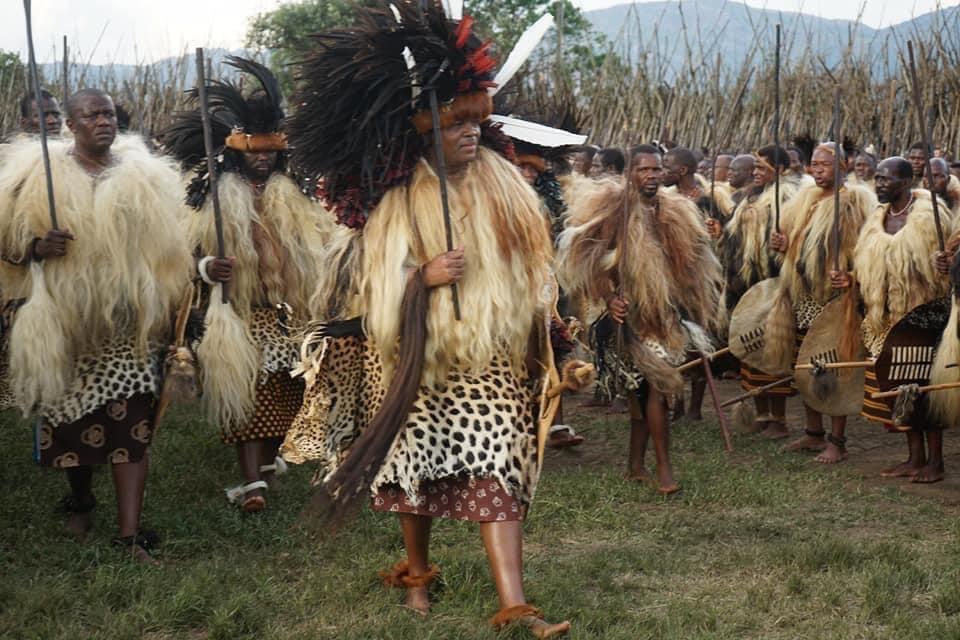
Chairman of the Elections and Boundaries Commission(EBC) Prince Mhlabuhlangene(pic: EBC).